Abstract: Coral broadcast spawning events – in which gametes are released on certain nights predictably in relation to lunar cycles – are critical to the maintenance and recovery of coral reefs following mass mortality. Artificial light at night (ALAN) from coastal and offshore developments threatens coral reef health by...
Continue reading
Abstract: Coral cover has declined worldwide due to anthropogenic stressors that manifest on both global and local scales. Coral communities that exist in extreme conditions can provide information on how these stressors influence ecosystem structure, with implications for their persistence under future conditions. The Port of Miami is located...
Continue reading
Abstract: The ability of reefs to protect coastlines from storm-driven flooding hinges on their capacity to keep pace with sea-level rise. Here, we show how and whether coral restoration could achieve the often-cited goal of reversing the impacts of coral-reef degradation to preserve this essential function. We combined coralgrowth...
Continue reading
Abstract: Sea level rise has accelerated during recent decades, exceeding rates recorded during the previous two millennia, and as a result many coastal habitats and species around the globe are being impacted. This situation is expected to worsen due to anthropogenically induced climate change. However, the magnitude and relevance...
Continue reading
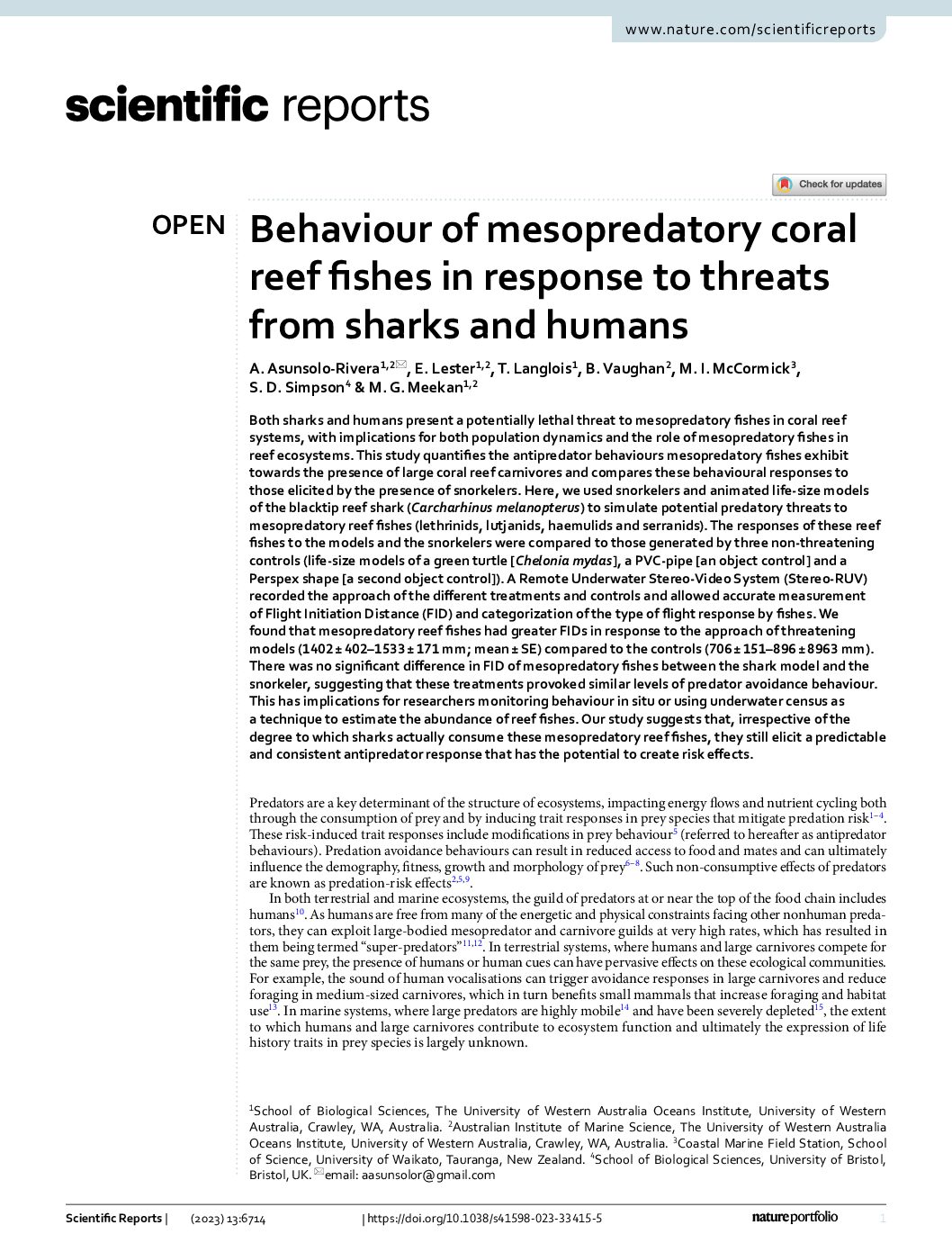
Abstract: Both sharks and humans present a potentially lethal threat to mesopredatory fishes in coral reef systems, with implications for both population dynamics and the role of mesopredatory fishes in reef ecosystems. This study quantifies the antipredator behaviours mesopredatory fishes exhibit towards the presence of large coral reef carnivores...
Continue reading
Background: Predation pressure and herbivory exert cascading effects on coral reef health and stability. However, the extent of these cascading effects can vary considerably across space and time. This variability is likely a result of the complex interactions between coral reefs’ biotic and abiotic dimensions. A major biological component...
Continue reading
Abstract: Understanding the drivers of net coral reef calcium carbonate production is increasingly important as ocean warming, acidification, and other anthropogenic stressors threaten the maintenance of coral reef structures and the services these ecosystems provide. Despite intense research effort on coral reef calcium carbonate production, the inclusion of a...
Continue reading
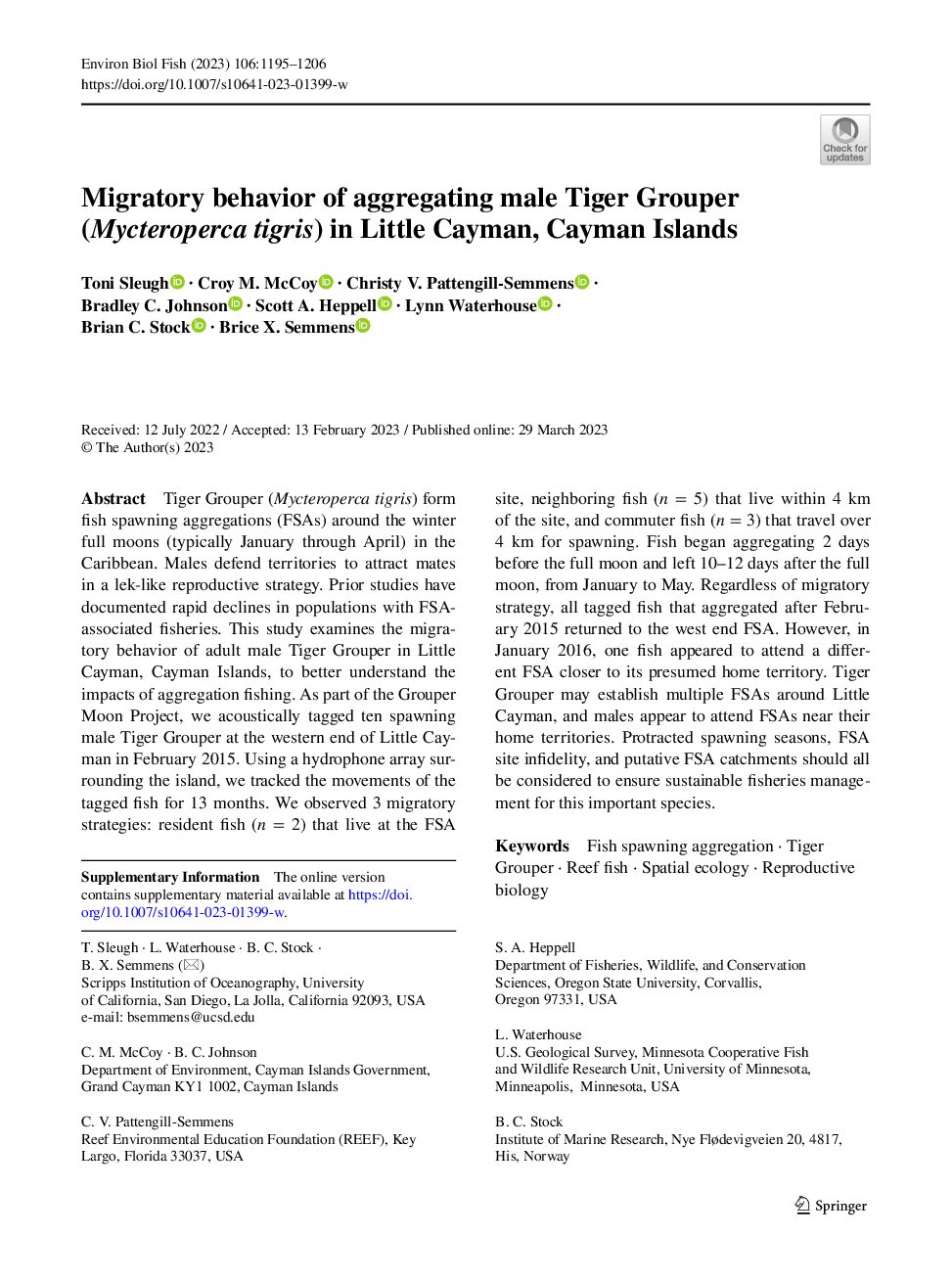
Abstract: Tiger Grouper (Mycteroperca tigris) form fish spawning aggregations (FSAs) around the winter full moons (typically January through April) in the Caribbean. Males defend territories to attract mates in a lek-like reproductive strategy. Prior studies have documented rapid declines in populations with FSAassociated fisheries. This study examines the migratory...
Continue reading
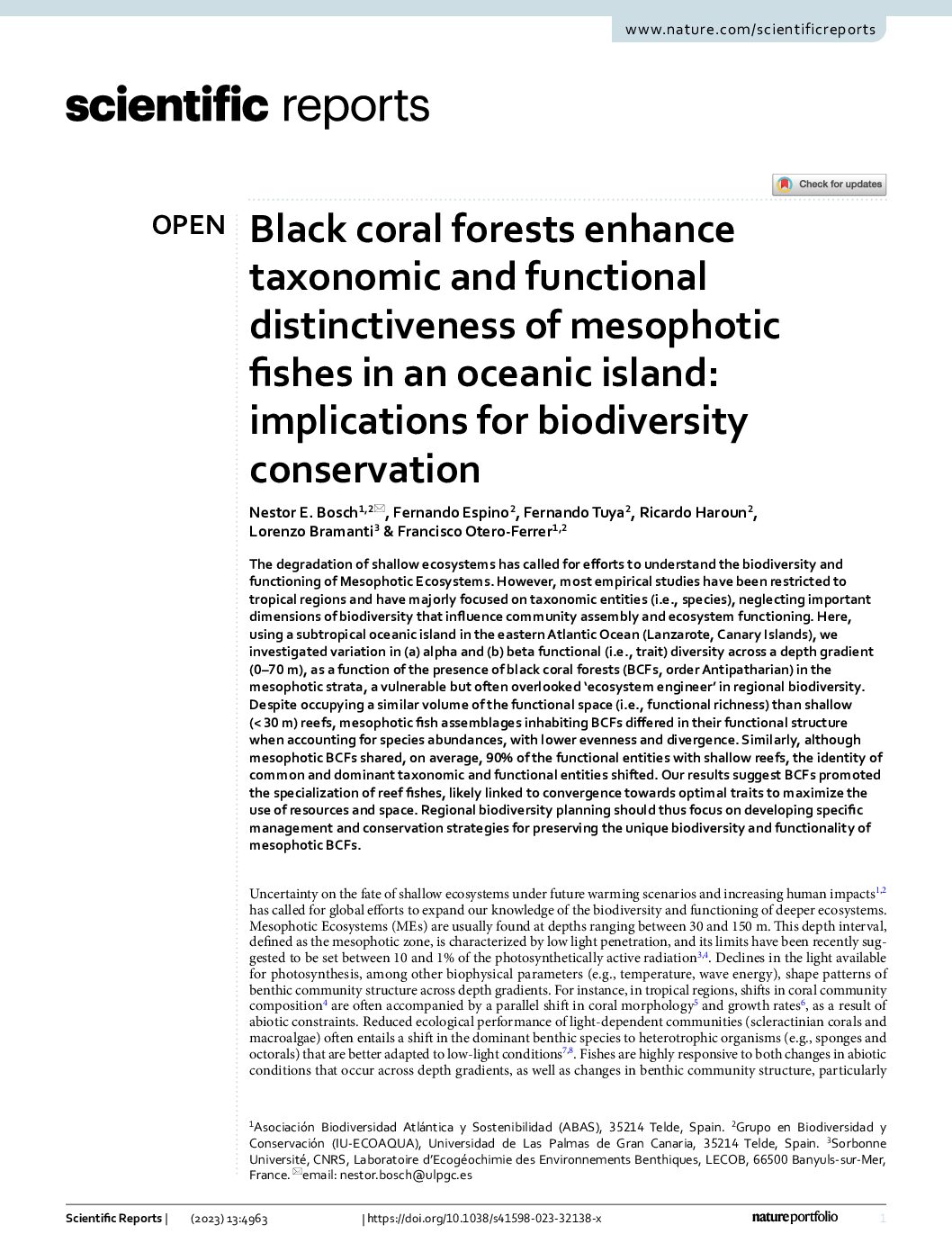
Abstract: The degradation of shallow ecosystems has called for eơorts to understand the biodiversity and functioning of Mesophotic Ecosystems. However, most empirical studies have been restricted to tropical regions and have majorly focused on taxonomic entities (i.e., species), neglecting important dimensions of biodiversity that inƪuence community assembly and ecosystem...
Continue reading
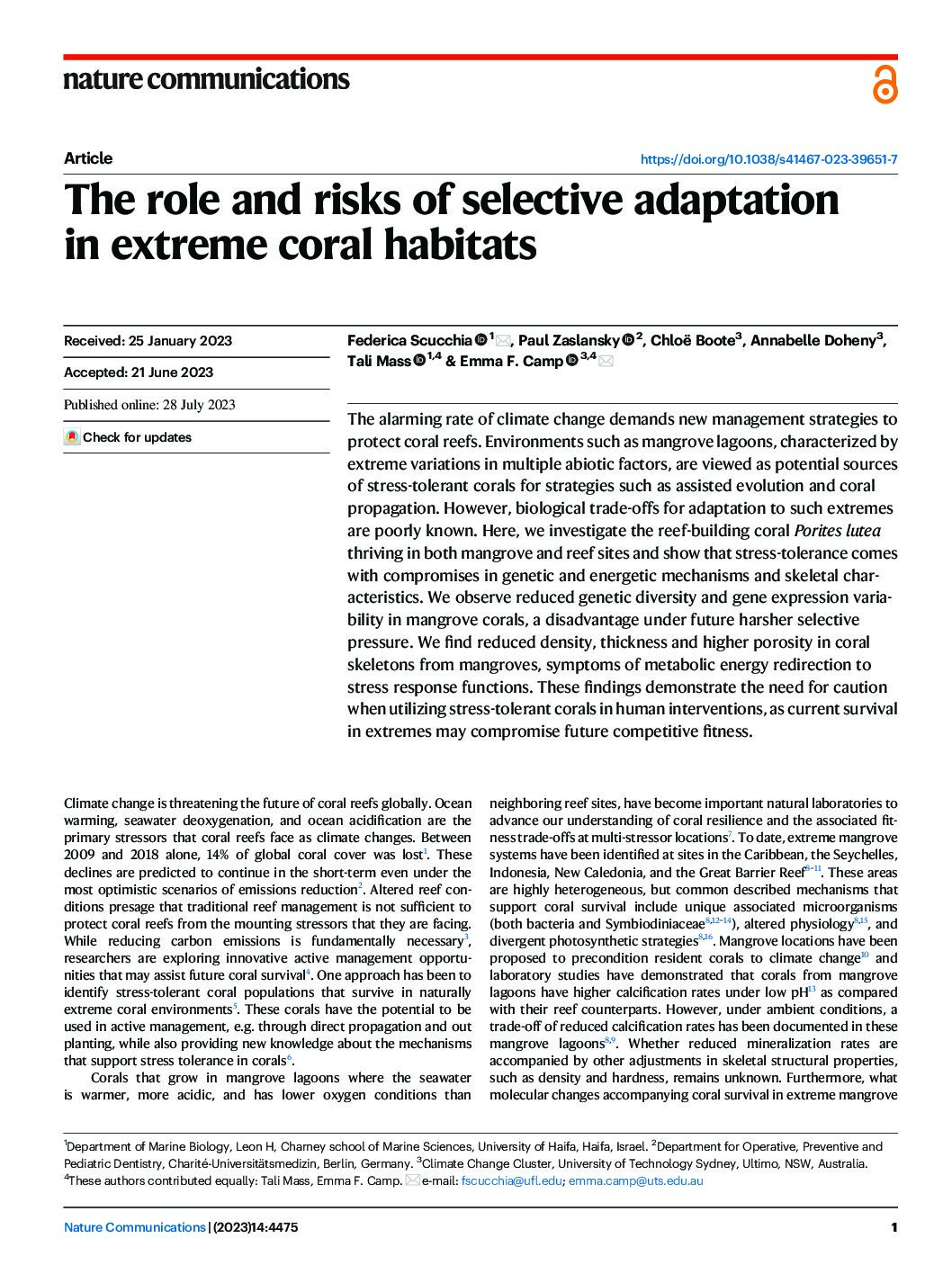
Abstract: The alarming rate of climate change demands new management strategies to protect coral reefs. Environments such as mangrove lagoons, characterized by extreme variations in multiple abiotic factors, are viewed as potential sources of stress-tolerant corals for strategies such as assisted evolution and coral propagation. However, biological trade-offs for...
Continue reading