Abstract: Confronting a sustained coral reef conservation crisis, we need new opportunities to rethink how to protect areas successfully and efficiently in the face of a changing world. We studied the benthic community, including foraminifera, fish community, and genetic connectivity (SSRs and SNPs) of main reef-building corals, Orbicella faveolata...
Continue reading
Abstract: The eastern tropical Pacific is oceanographically unfavorable for coral‑reef development. Nevertheless, reefs have persisted there for the last 7000 years. Rates of vertical accretion during the Holocene have been similar in the strong‑upwelling Gulf of Panamá (GoP) and the adjacent, weak‑upwelling Gulf of Chiriquí (GoC); however, seasonal upwelling...
Continue reading
Abstract: For reef framework to persist, calcium carbonate production by corals and other calcifiers needs to outpace loss due to physical, chemical, and biological erosion. This balance is both delicate and dynamic and is currently threatened by the eơects of ocean warming and acidification. Although the protection and recovery...
Continue reading
Abstract: Even optimistic climate scenarios predict catastrophic consequences for coral reef ecosystems by 2100. Understanding how reef connectivity, biodiversity and resilience are shaped by climate variability would improve chances to establish sustainable management practices. In this regard, ecoregionalization and connectivity are pivotal to designating effective marine protected areas. Here,...
Continue reading
Abstract: Despite cold‑water coral (CWC) reefs being considered biodiversity hotspots, very little is known about the main processes driving their morphological development. Indeed, there is a considerable knowledge gap in quantitative experimental studies that help understand the interaction between reef morphology, near‑bed hydrodynamics, coral growth, and (food) particle transport...
Continue reading
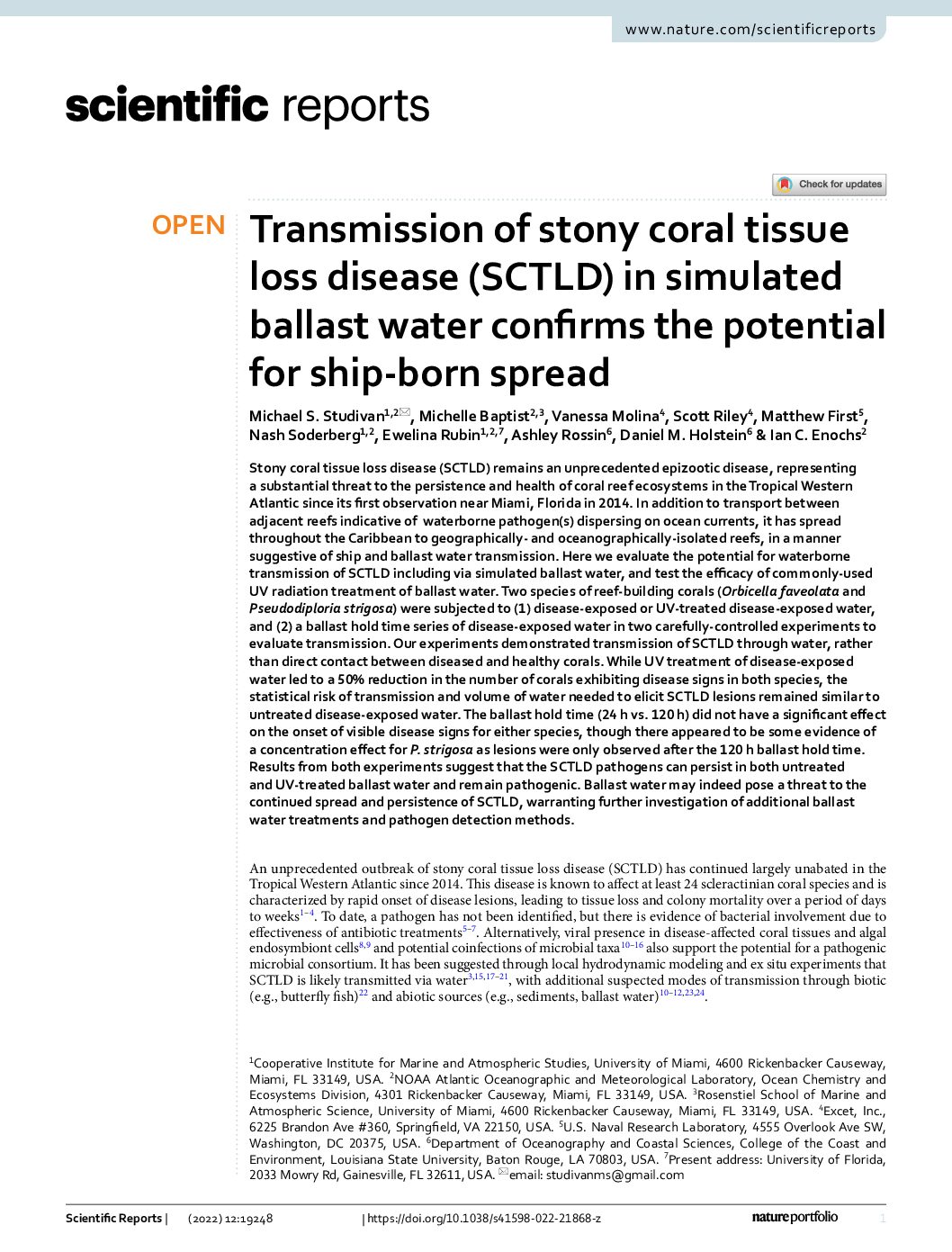
Abstract: Stony coral tissue loss disease (SCTLD) remains an unprecedented epizootic disease, representing a substantial threat to the persistence and health of coral reef ecosystems in the Tropical Western Atlantic since its first observation near Miami, Florida in 2014. In addition to transport between adjacent reefs indicative of waterborne...
Continue reading
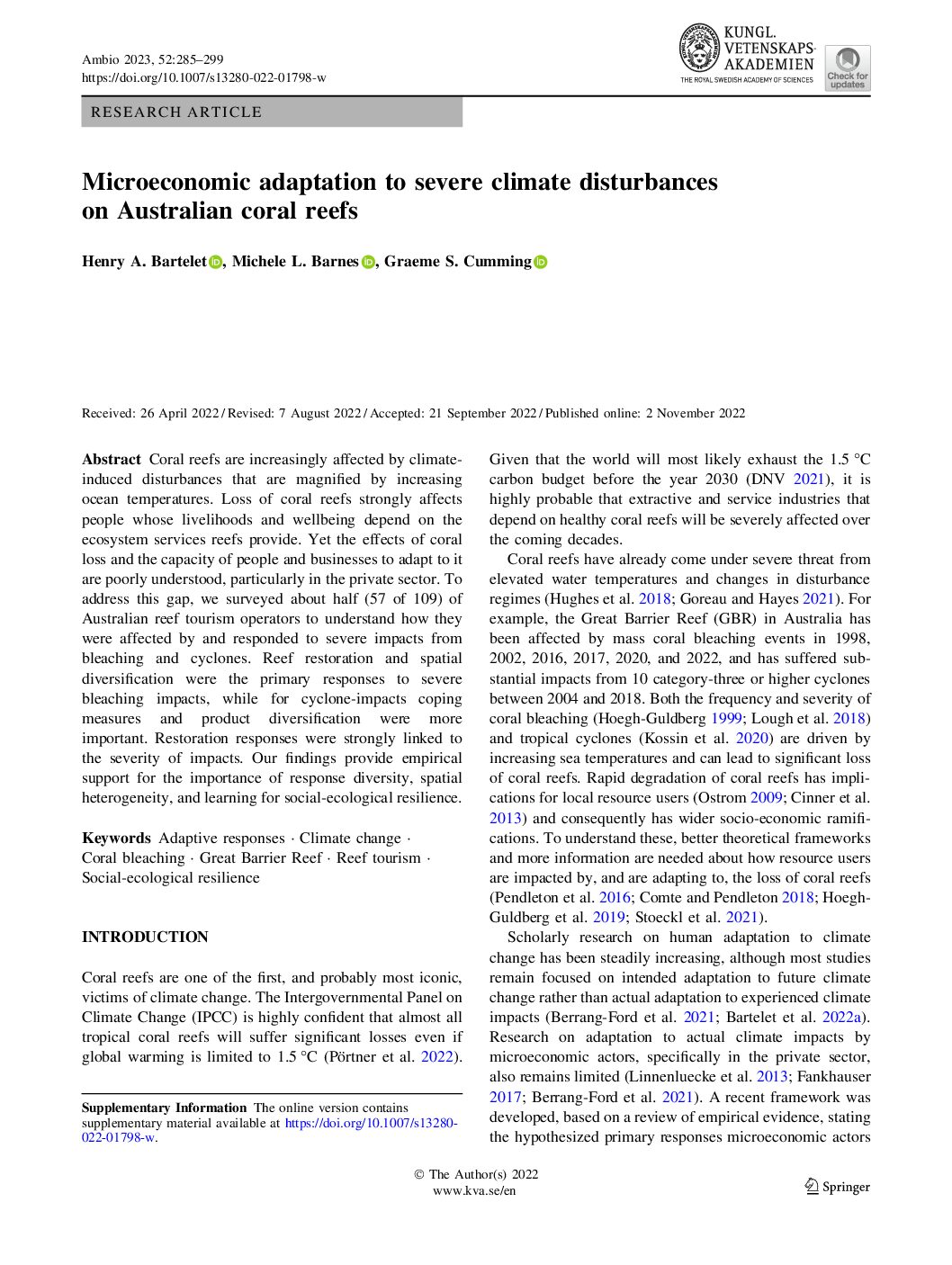
Abstract: Coral reefs are increasingly affected by climateinduced disturbances that are magnified by increasing ocean temperatures. Loss of coral reefs strongly affects people whose livelihoods and wellbeing depend on the ecosystem services reefs provide. Yet the effects of coral loss and the capacity of people and businesses to adapt...
Continue reading
Abstract: Exposure to deoxygenation from climate warming and pollution is emerging as a contributing factor of coral bleaching and mortality. However, the combined eơects of heating and deoxygenation on bleaching susceptibility remain unknown. Here, we employed short-term thermal stress assays to show that deoxygenated seawater can lower the thermal...
Continue reading
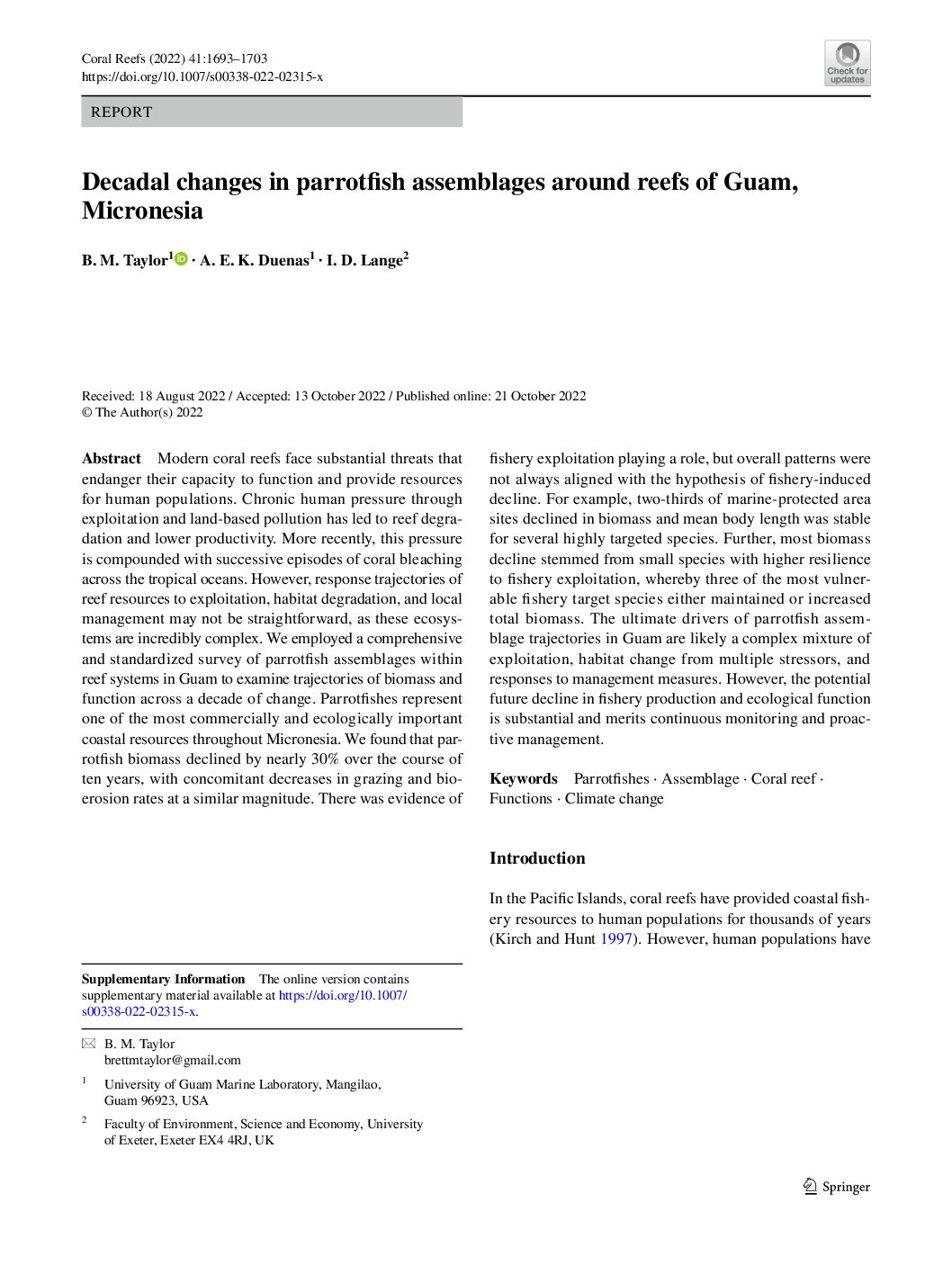
Abstract: Modern coral reefs face substantial threats that endanger their capacity to function and provide resources for human populations. Chronic human pressure through exploitation and land-based pollution has led to reef degradation and lower productivity. More recently, this pressure is compounded with successive episodes of coral bleaching across the...
Continue reading
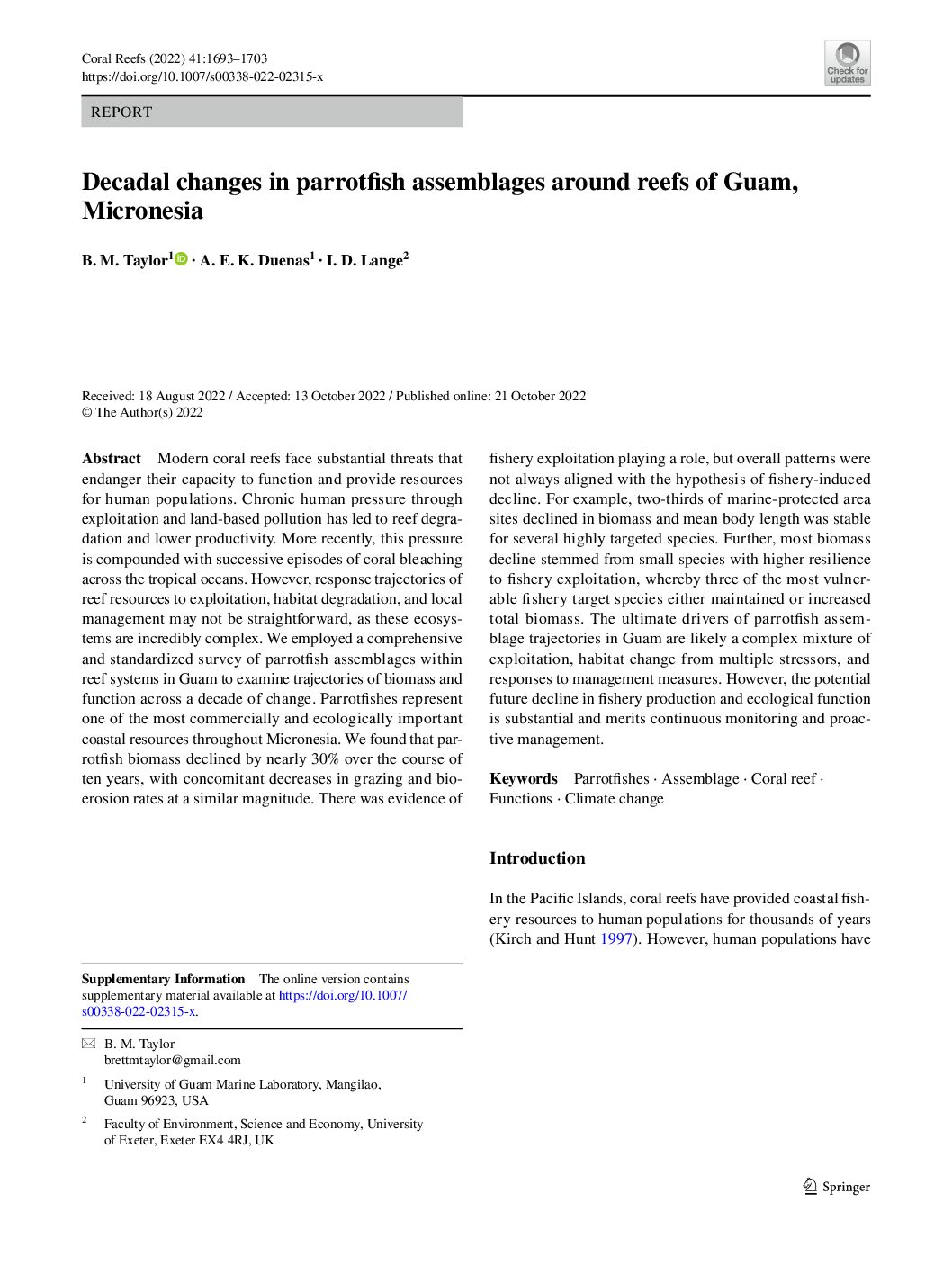
Abstract: Modern coral reefs face substantial threats that endanger their capacity to function and provide resources for human populations. Chronic human pressure through exploitation and land-based pollution has led to reef degradation and lower productivity. More recently, this pressure is compounded with successive episodes of coral bleaching across the...
Continue reading