Abstract: For sessile marine invertebrates with complex life cycles, habitat choice is directed by the larval phase. Defining which habitat-linked cues are implicated in sessile invertebrate larval settlement has largely concentrated on chemical cues which are thought to signal optimal habitat. There has been less effort establishing physical settlement...
Continue reading
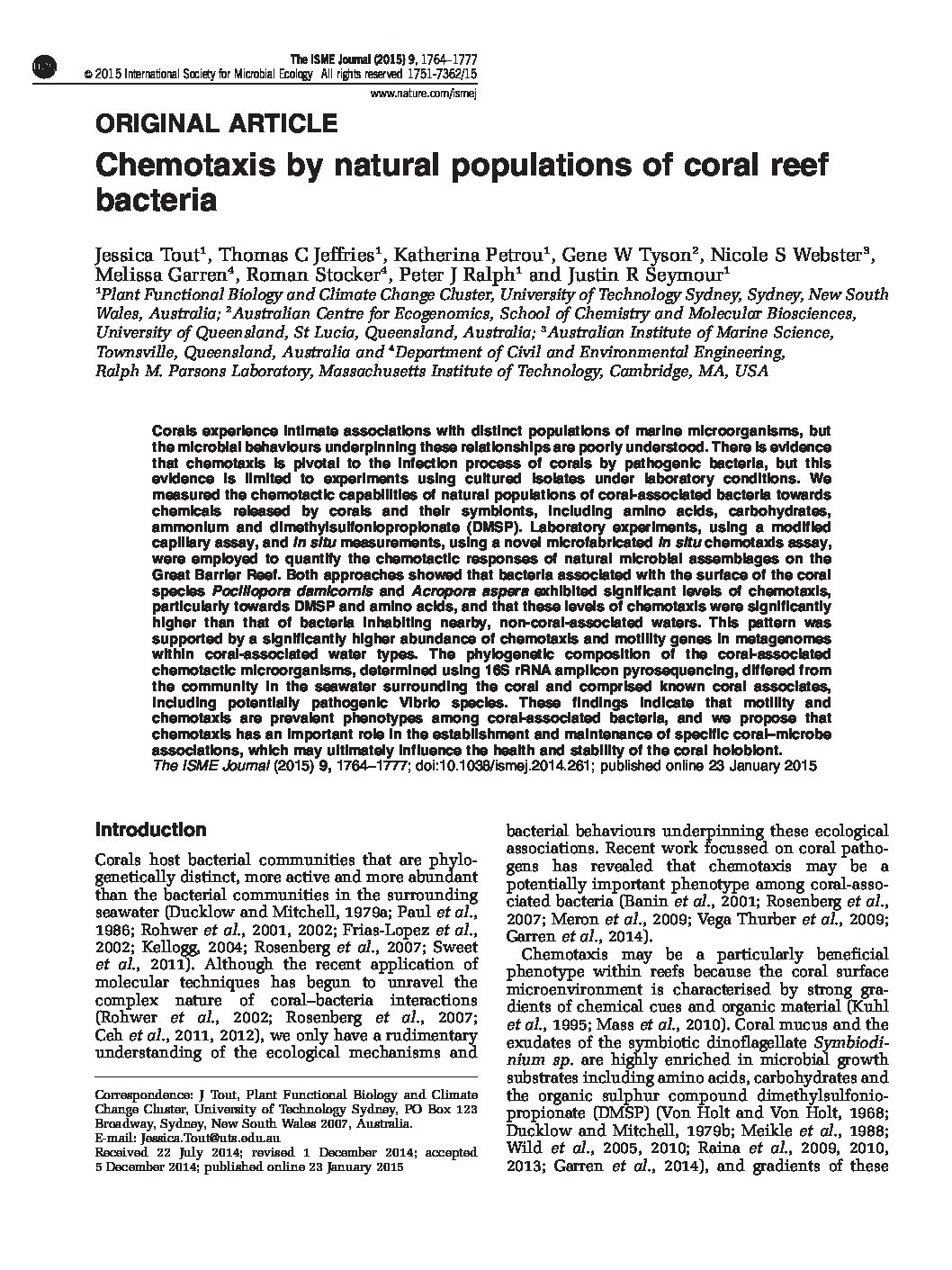
Abstract: Corals experience intimate associations with distinct populations of marine microorganisms, but the microbial behaviours underpinning these relationships are poorly understood. There is evidence that chemotaxis is pivotal to the infection process of corals by pathogenic bacteria, but this evidence is limited to experiments using cultured isolates under laboratory...
Continue reading
Abstract: Coral reefs in Indonesia are threatened by destructive fishing including the use of bombs and cyanide. Reefs in eastern Indonesia are particularly affected including reefs within 17 Islands Marine Recreation Park (MRP), Riung, Flores. Coral reef ecosystems that have been damaged can recover when the threat is stopped...
Continue reading
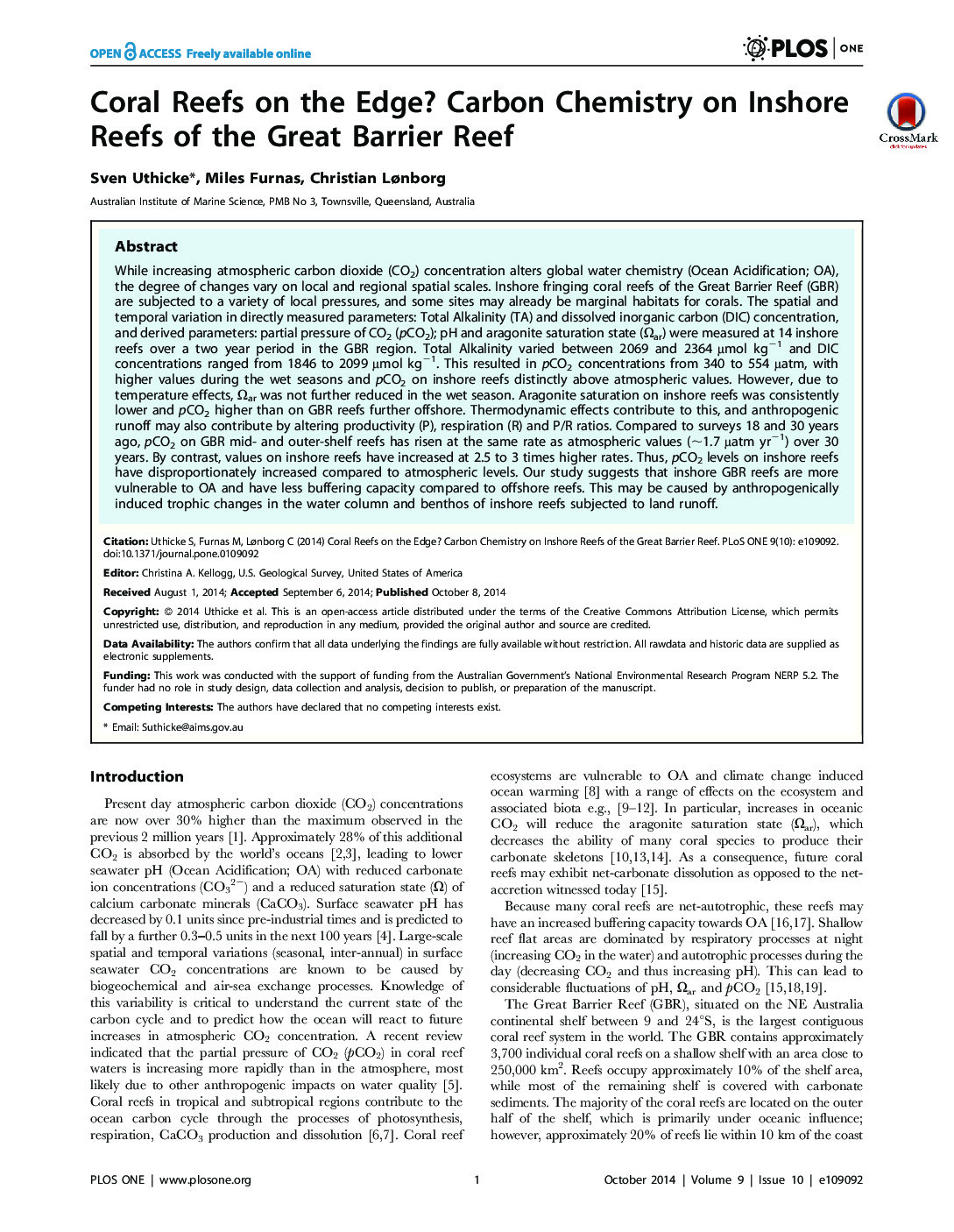
Abstract: While increasing atmospheric carbon dioxide (CO2) concentration alters global water chemistry (Ocean Acidification; OA), the degree of changes vary on local and regional spatial scales. Inshore fringing coral reefs of the Great Barrier Reef (GBR) are subjected to a variety of local pressures, and some sites may already...
Continue reading
Abstract: High biodiversity ecosystems are commonly associated with complex habitats. Coral reefs are highly diverse ecosystems, but are under increasing pressure from numerous stressors, many of which reduce live coral cover and habitat complexity with concomitant effects on other organisms such as reef fishes. While previous studies have highlighted...
Continue reading
Abstract: The lionfish Pterois volitans is an invasive species throughout the Western Atlantic that disturbs functioning of local ecosystems such as coral reefs via fast and intense consumption of small fish and invertebrates. In 2009, lionfish populated the bays of Tayrona National Natural Park (TNNP), a biodiversity hotspot in...
Continue reading
Abstract: The world’s coastal zones are experiencing rapid development and an increase in storms and flooding. These hazards put coastal communities at heightened risk, which may increase with habitat loss. Here we analyse globally the role and cost effectiveness of coral reefs in risk reduction. Meta-analyses reveal that coral...
Continue reading
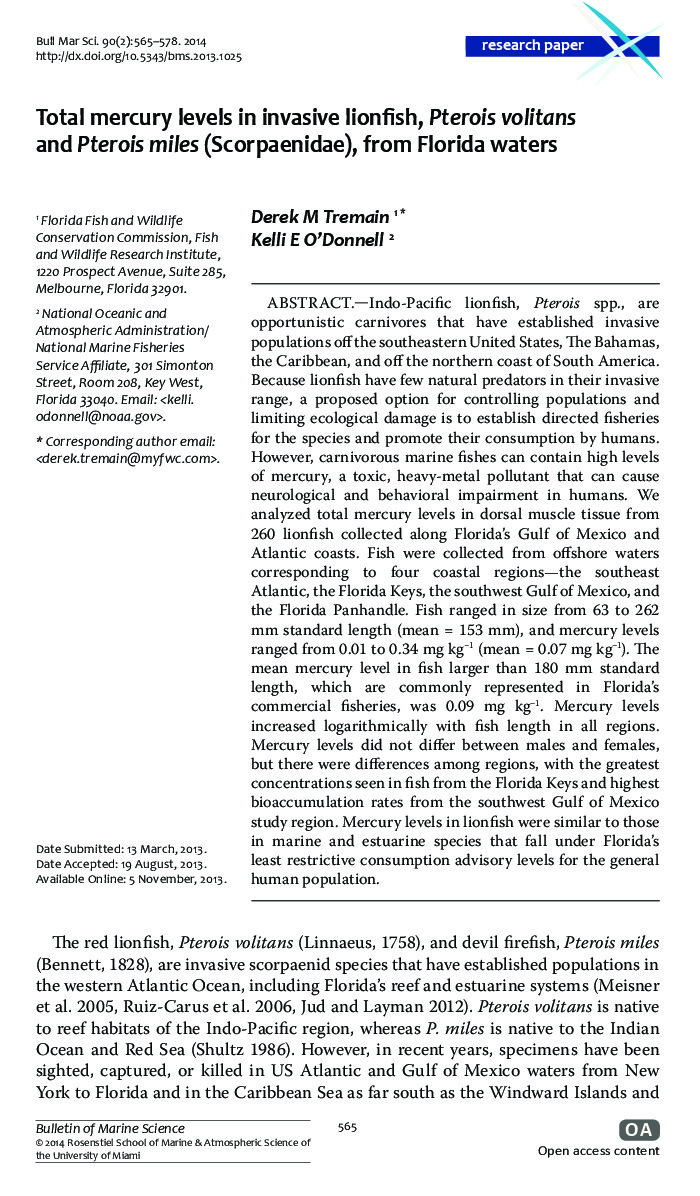
Abstract: Indo-Pacific lionfish, Pterois spp., are opportunistic carnivores that have established invasive populations off the southeastern United states, The bahamas, the caribbean, and off the northern coast of south America. because lionfish have few natural predators in their invasive range, a proposed option for controlling populations and limiting ecological...
Continue reading
Abstract: Anthropogenic nutrient enrichment is often associated with coral reef decline. Consequently, there is a large consent that increased nutrient influxes in reef waters have negative longterm consequences for corals. However, the mechanisms by which dissolved inorganic nutrients can disturb corals and their symbiotic algae are subject to controversial...
Continue reading
Abstract: More diverse communities are thought to be more stable—the diversity–stability hypothesis—due to increased resistance to and recovery from disturbances. For example, high diversity can make the presence of resilient or fast growing species and key facilitations among species more likely. How natural, geographic biodiversity patterns and changes in...
Continue reading