Abstract: While many studies of coral bleaching report on broad, regional scale responses, fewer examine variation in susceptibility among coral taxa and changes in community structure, before, during and after bleaching on individual reefs. Here we report in detail on the response to bleaching by a coral community on...
Continue reading
Abstract: Land-use change in the coastal zone has led to worldwide degradation of marine coastal ecosystems and a loss of the goods and services they provide. Restoration is the process of assisting the recovery of an ecosystem that has been degraded, damaged, or destroyed and is critical for habitats...
Continue reading
Abstract: Elkhorn coral (Acropora palmata) populations provide important ecological functions on shallow Caribbean reefs, many of which were lost when a disease reduced their abundance by more than 95% beginning in the mid-1970s. Since then, a lack of significant recovery has prompted rehabilitation initiatives throughout the Caribbean. Here, we...
Continue reading
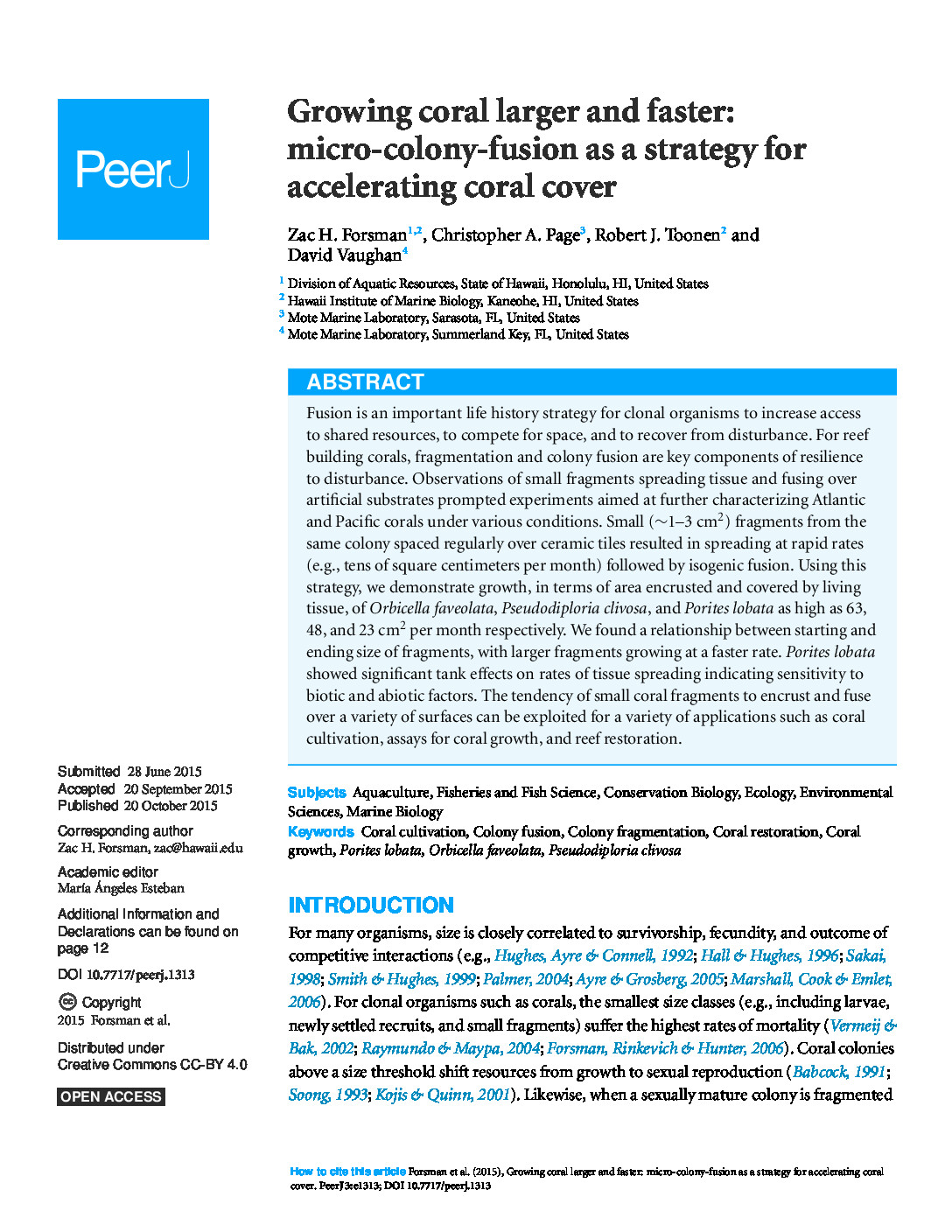
Abstract: Fusion is an important life history strategy for clonal organisms to increase access to shared resources, to compete for space, and to recover from disturbance. For reef building corals, fragmentation and colony fusion are key components of resilience to disturbance. Observations of small fragments spreading tissue and fusing...
Continue reading
Abstract: Reef-building corals produce planktonic planula larvae that must select an appropriate habitat to settle and spend the rest of their life, a behaviour that plays a critical role in survival. Here, we report that larvae obtained from a deep-water population of Pseudodiploria strigosa settled more readily under blue...
Continue reading
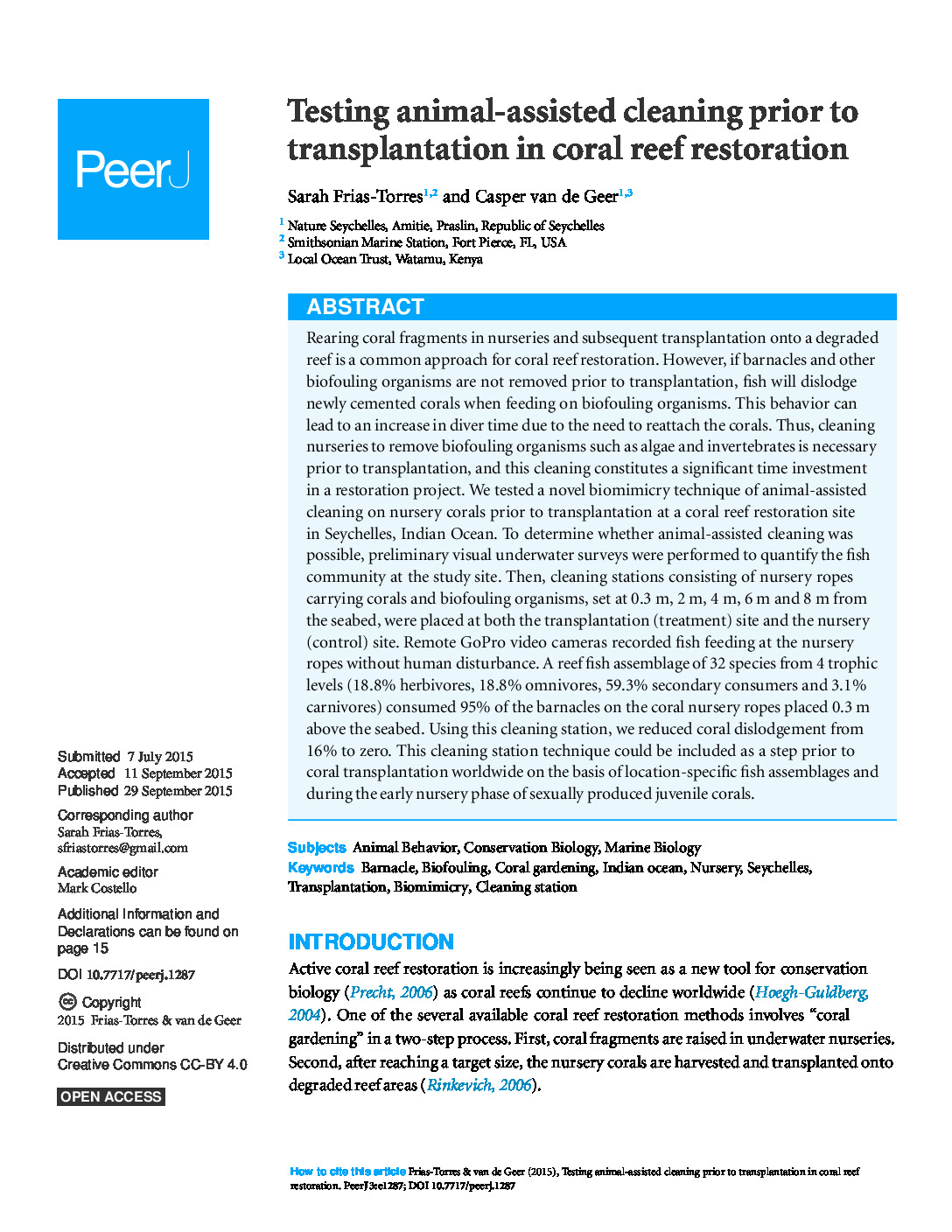
Abstract: Rearing coral fragments in nurseries and subsequent transplantation onto a degraded reef is a common approach for coral reef restoration. However, if barnacles and other biofouling organisms are not removed prior to transplantation, fish will dislodge newly cemented corals when feeding on biofouling organisms. This behavior can lead...
Continue reading
Abstract: Globally, many coral reefs are degraded and demonstrate reduced coral cover and increased macroalgal abundance. While negative correlations between macroalgae and coral recruitment have commonly been documented, the mechanisms by which macroalgae affects recruitment have received little attention. Here we examined the effect of macroalgae on larval settlement...
Continue reading
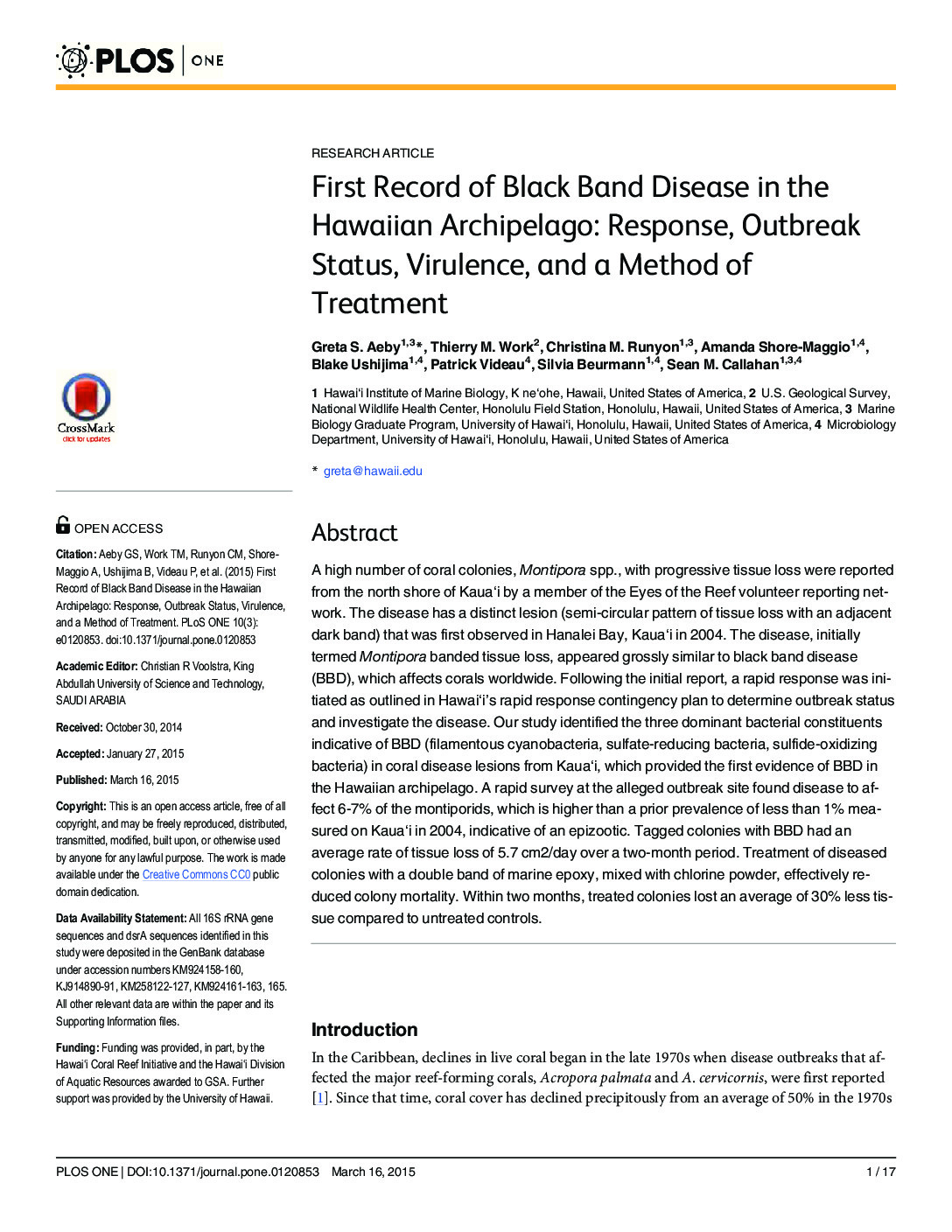
Abstract: A high number of coral colonies, Montipora spp., with progressive tissue loss were reported from the north shore of Kaua‘i by a member of the Eyes of the Reef volunteer reporting network. The disease has a distinct lesion (semi-circular pattern of tissue loss with an adjacent dark band)...
Continue reading
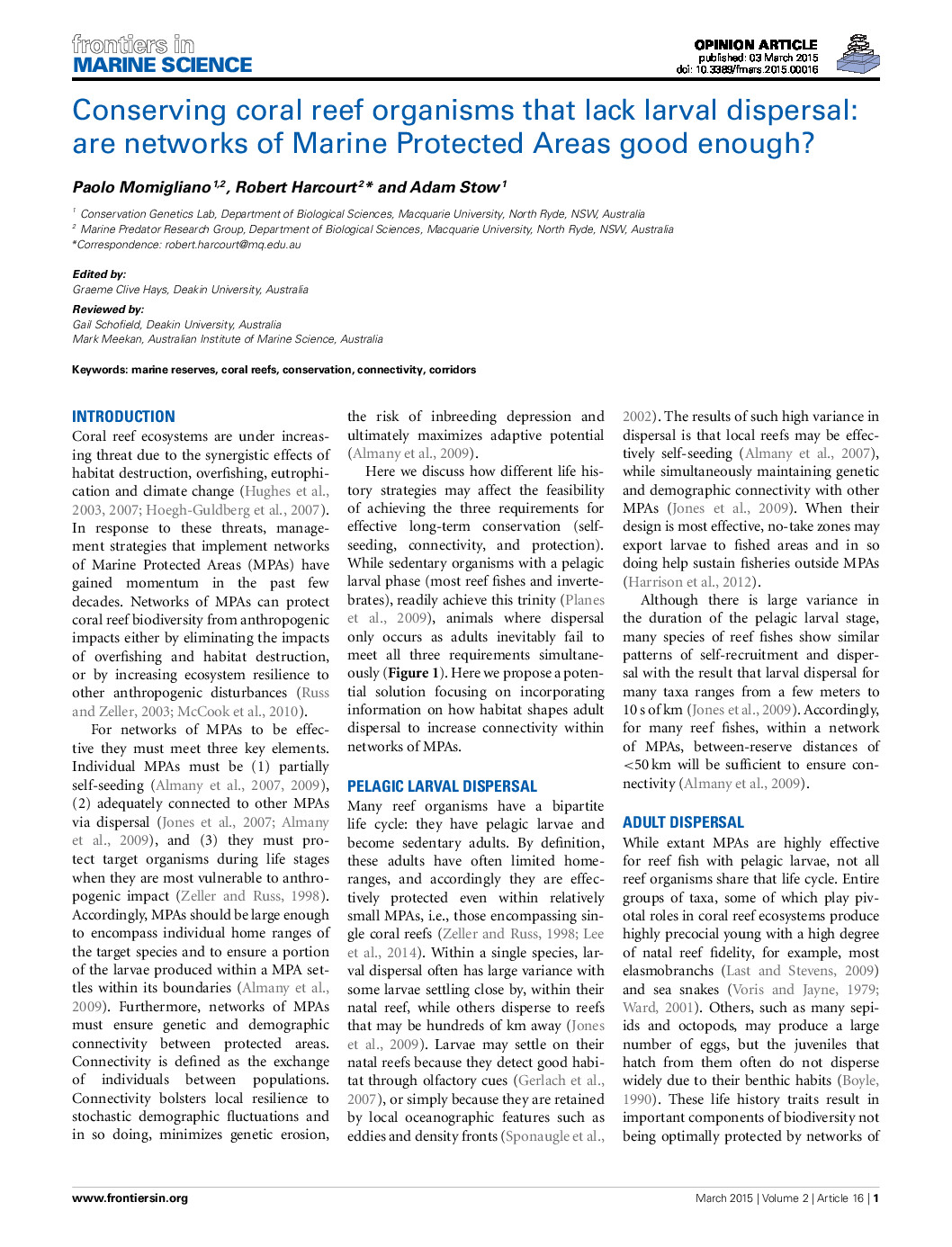
Introduction: Coral reef ecosystems are under increasing threat due to the synergistic effects of habitat destruction, overfishing, eutrophication and climate change (Hughes et al., 2003, 2007; Hoegh-Guldberg et al., 2007). In response to these threats, management strategies that implement networks of Marine Protected Areas (MPAs) have gained momentum in...
Continue reading
Abstract: The genetic enhancement of wild animals and plants for characteristics that benefit human populations has been practiced for thousands of years, resulting in impressive improvements in commercially valuable species. Despite these benefits, genetic manipulations are rarely considered for noncommercial purposes, such as conservation and restoration initiatives. Over the...
Continue reading