Abstract: The decline of reef-building corals in conjunction with shifts to short-lived opportunistic species has prompted concerns that Caribbean reef framework-building capacity has substantially diminished. Restoring herbivore populations may be a potential driver of coral recovery; however, the impact of herbivores on coral calcification has been little studied. We...
Continue reading
Abstract: Massive declines in population abundances of marine animals have been documented over century-long time scales. However, analogous loss of spatial extent of habitat-forming organisms is less well known because georeferenced data are rare over long time scales, particularly in subtidal, tropical marine regions. We use high-resolution historical nautical...
Continue reading
Abstract: Chronic anthropogenic disturbances on coral reefs in the form of overfishing and pollution can shift benthic community composition away from stony corals and toward macroalgae. The use of reefs for recreational snorkeling and diving potentially can lead to similar ecological impacts if not well-managed, but impacts of snorkeling...
Continue reading
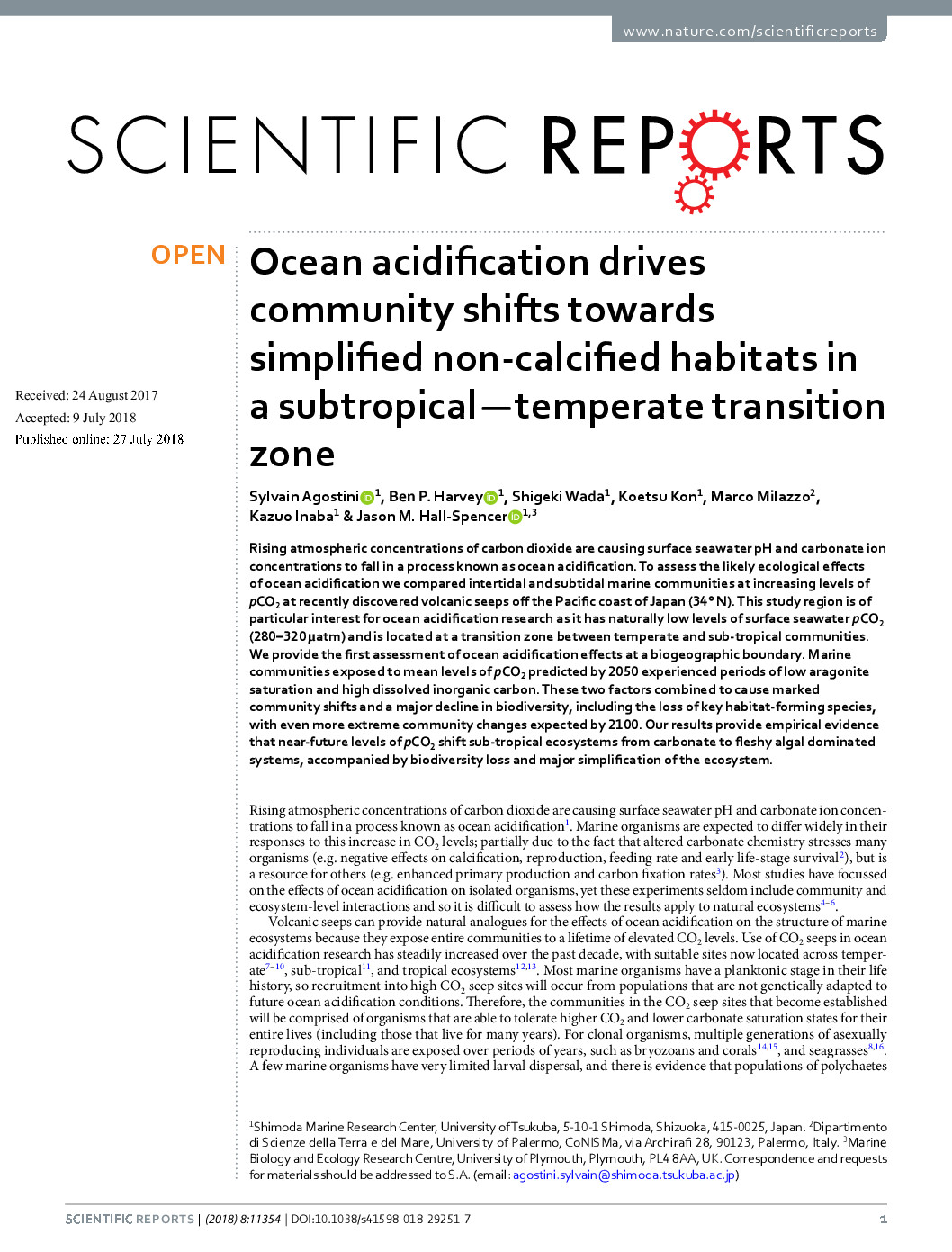
Abstract: Rising atmospheric concentrations of carbon dioxide are causing surface seawater pH and carbonate ion concentrations to fall in a process known as ocean acidification. To assess the likely ecological effects of ocean acidification we compared intertidal and subtidal marine communities at increasing levels of pCO2 at recently discovered...
Continue reading
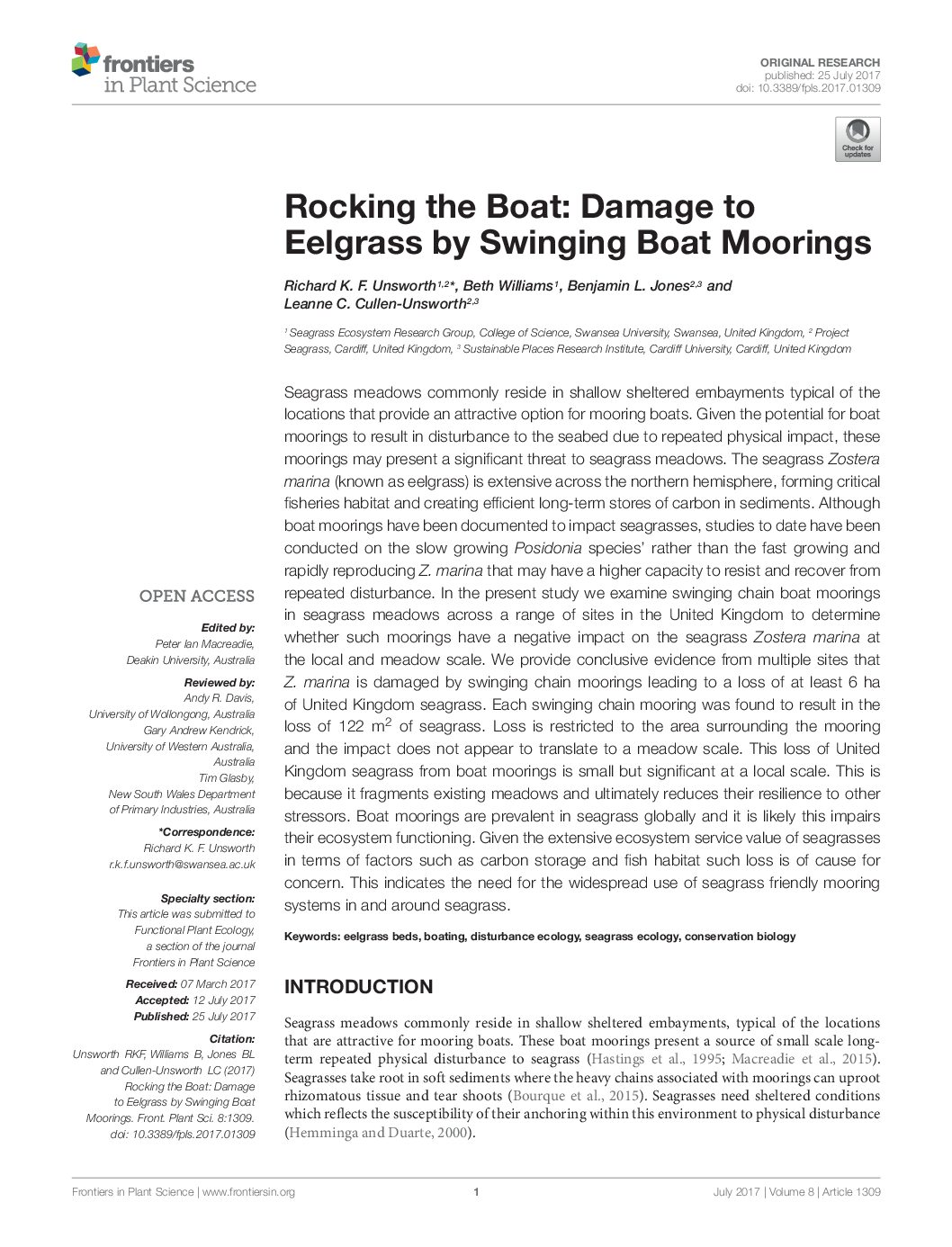
Abstract: Seagrass meadows commonly reside in shallow sheltered embayments typical of the locations that provide an attractive option for mooring boats. Given the potential for boat moorings to result in disturbance to the seabed due to repeated physical impact, these moorings may present a significant threat to seagrass meadows....
Continue reading
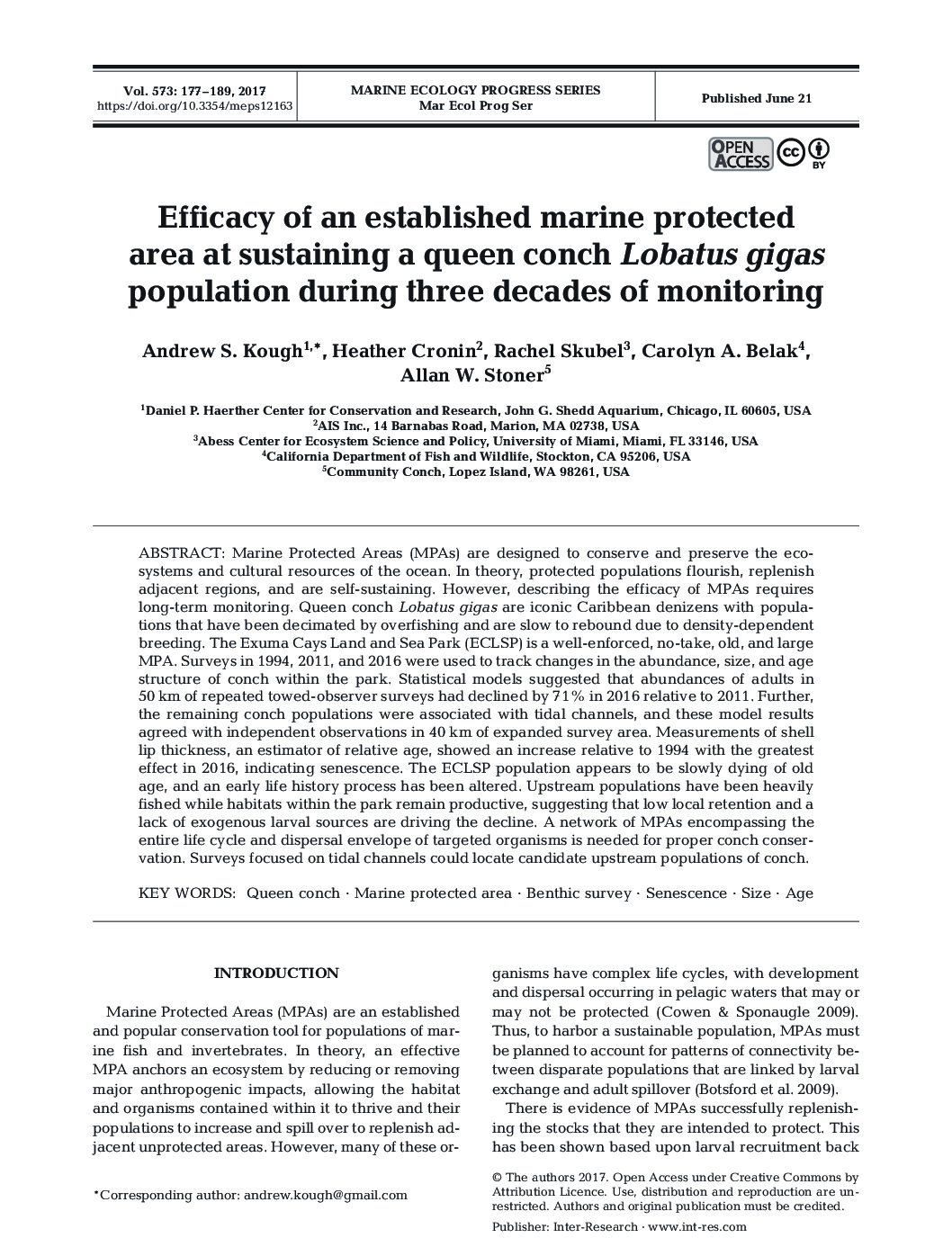
Abstract: Marine Protected Areas (MPAs) are designed to conserve and preserve the eco – systems and cultural resources of the ocean. In theory, protected populations flourish, replenish adjacent regions, and are self-sustaining. However, describing the efficacy of MPAs requires long-term monitoring. Queen conch Lobatus gigas are iconic Caribbean denizens...
Continue reading
Abstract: Seabirds concentrate nutrients from large marine areas on their nesting islands playing an important ecological role in nutrient transfer between marine and terrestrial ecosystems. Here we investigate the role of guano on corals reefs across scales by analyzing the stable nitrogen isotopic (δ15N) values of the scleractinian coral...
Continue reading
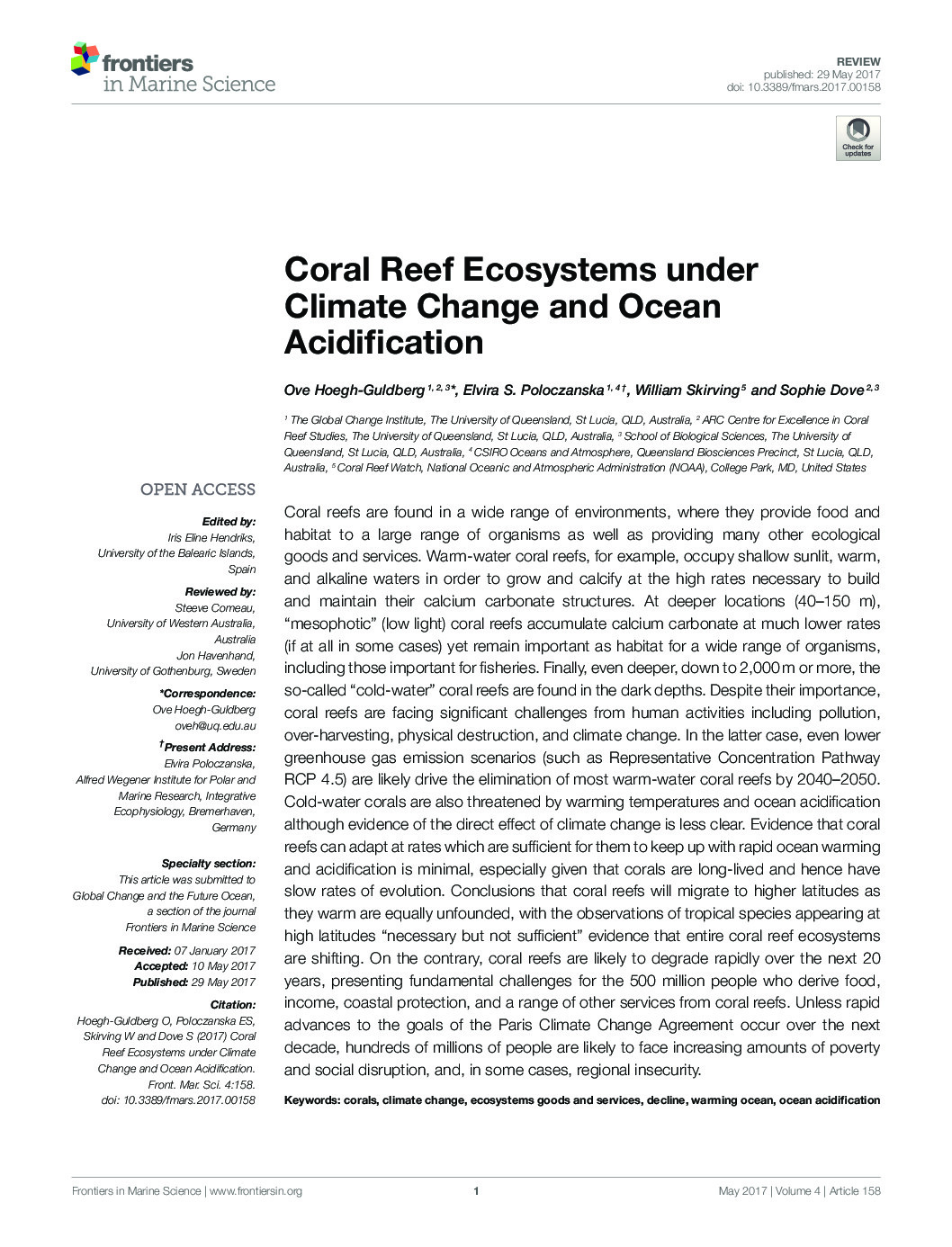
Abstracts: Coral reefs are found in a wide range of environments, where they provide food and habitat to a large range of organisms as well as providing many other ecological goods and services. Warm-water coral reefs, for example, occupy shallow sunlit, warm, and alkaline waters in order to grow...
Continue reading
Abstract: Invasive lionfish are assumed to significantly affect Caribbean reef fish communities. However, evidence of lionfish effects on native reef fishes is based on uncontrolled observational studies or small-scale, unrepresentative experiments, with findings ranging from no effect to large effects on prey density and richness. Moreover, whether lionfish affect...
Continue reading
Abstract: Reef coral assemblages are highly dynamic and subject to repeated disturbances, which are predicted to increase in response to climate change. Consequently there is an urgent need to improve our understanding of the mechanisms underlying different recovery scenarios. Recent work has demonstrated that reef structural complexity can facilitate...
Continue reading