Abstract: Ocean warming is resulting in increased occurrence of mass coral bleaching; a response in which the intracellular algal endosymbionts (Symbiodinium sp.) are expelled from the coral host due to physiological stress. This detrimental process is often attributed to overproduction of reactive oxygen species (ROS) that leak out of...
Continue reading
Abstract: Coastal oceans are increasingly eutrophic, warm and acidic through the addition of anthropogenic nitrogen and carbon, respectively. Among the most sensitive taxa to these changes are scleractinian corals, which engineer the most biodiverse ecosystems on Earth. Corals’ sensitivity is a consequence of their evolutionary investment in symbiosis with...
Continue reading
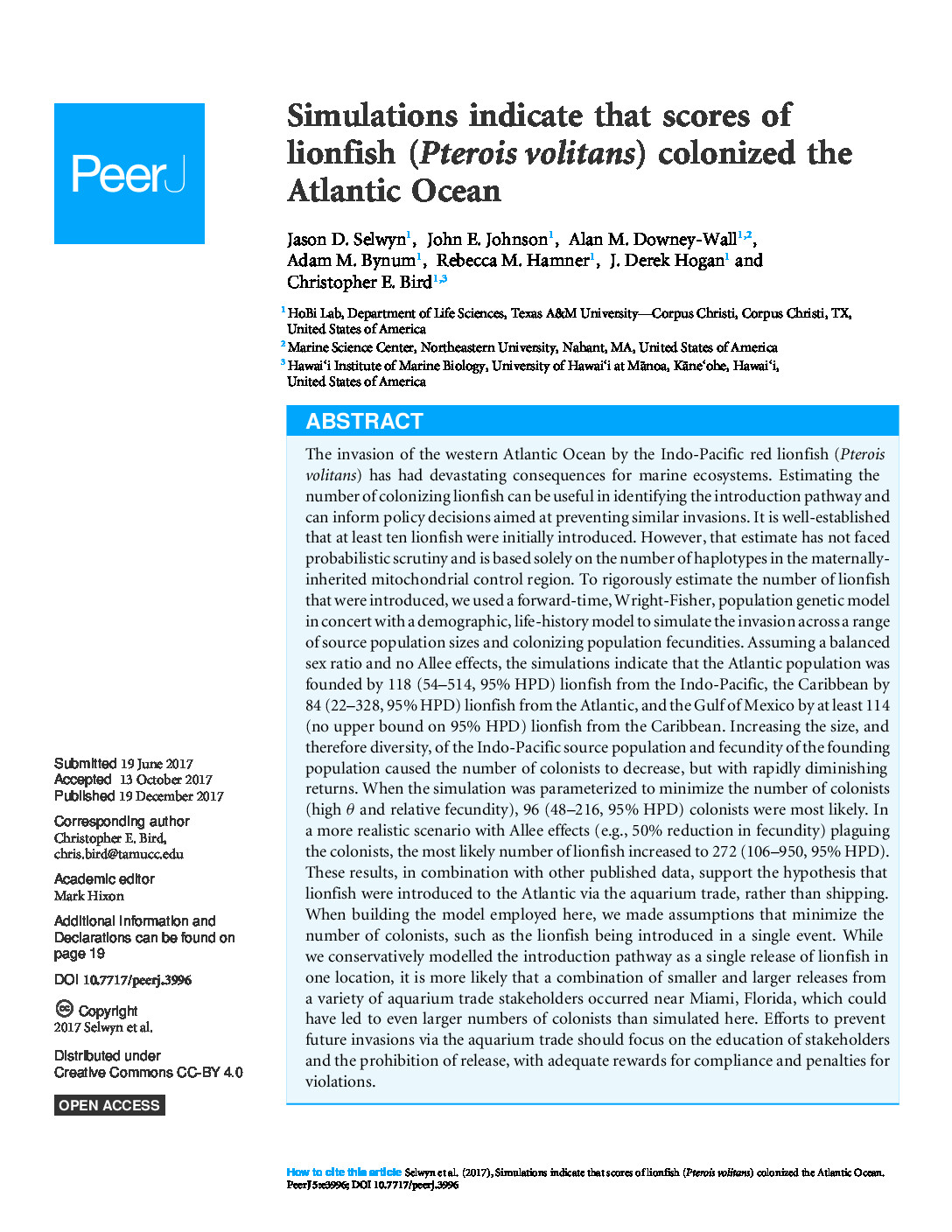
Abstract: The invasion of the western Atlantic Ocean by the Indo-Pacific red lionfish (Pterois volitans) has had devastating consequences for marine ecosystems. Estimating the number of colonizing lionfish can be useful in identifying the introduction pathway and can inform policy decisions aimed at preventing similar invasions. It is well-established...
Continue reading
Abstract: The effects of climate change and marine invasive species have posed a major threat to significant ecological, aesthetic, economic and amenity value to the countries and territories of the Wider Caribbean Region. Today, the Caribbean Sea is plagued with the invasive lionfish (Pterois volitans and P. miles). As...
Continue reading
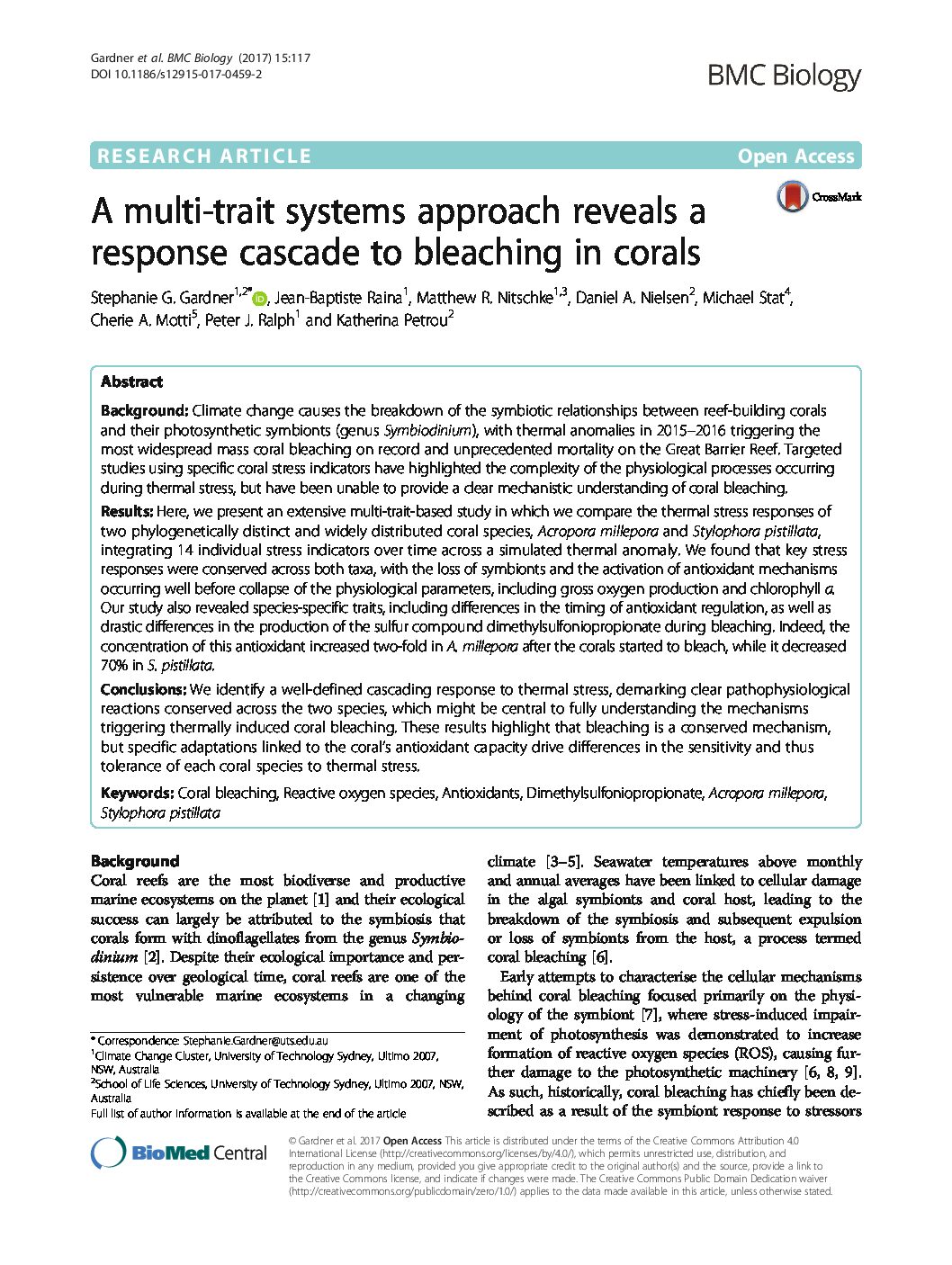
Abstract: Background: Climate change causes the breakdown of the symbiotic relationships between reef-building corals and their photosynthetic symbionts (genus Symbiodinium), with thermal anomalies in 2015–2016 triggering the most widespread mass coral bleaching on record and unprecedented mortality on the Great Barrier Reef. Targeted studies using specific coral stress indicators...
Continue reading
Abstract: Population genomic surveys suggest that climate-associated genetic variation occurs widely across species, but whether it is sufficient to allow population persistence via evolutionary adaptation has seldom been quantified. To ask whether rapid adaptation in reef-building corals can keep pace with future ocean warming, we measured genetic variation at...
Continue reading
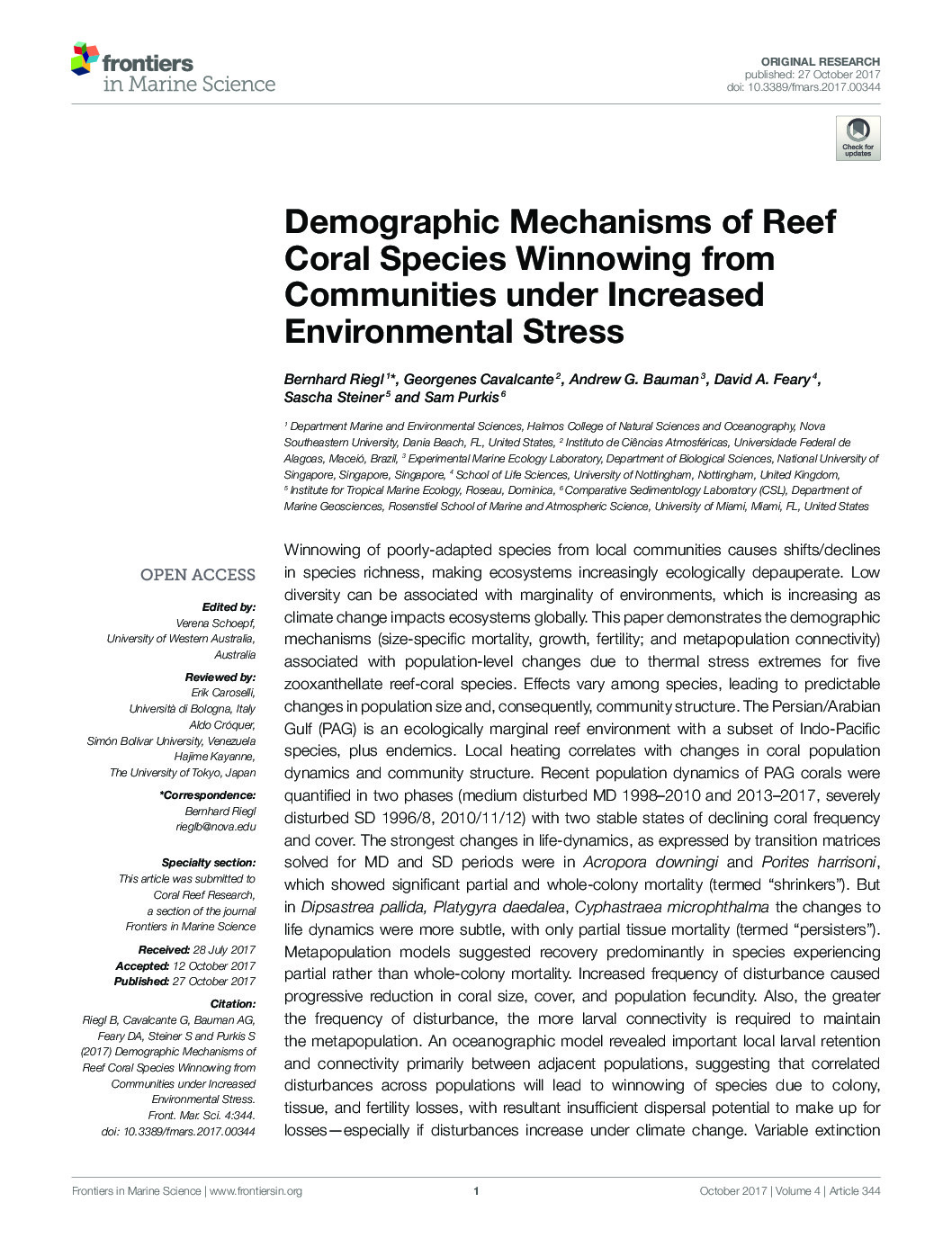
Abstract: Winnowing of poorly-adapted species from local communities causes shifts/declines in species richness, making ecosystems increasingly ecologically depauperate. Low diversity can be associated with marginality of environments, which is increasing as climate change impacts ecosystems globally. This paper demonstrates the demographic mechanisms (size-specific mortality, growth, fertility; and metapopulation connectivity)...
Continue reading
Abstract: Structural complexity strongly influences biodiversity and ecosystem productivity. On coral reefs, structural complexity is typically measured using a single and small-scale metric (‘rugosity’) that represents multiple spatial attributes differentially exploited by species, thus limiting a complete understanding of how fish associate with reef structure. We used a novel...
Continue reading
Abstract: Reef-building corals have essential roles in reef ecosystems but are highly susceptible to disturbances. Increasing anthropogenic disturbances are eroding coral community resilience, leading to declining reef ecosystem function and status globally. Successful reproduction and recruitment are essential for restoring coral populations but recruitment-limitation can constrain recovery. We supplied...
Continue reading
Abstract: Citizen science approaches provide opportunities to support ecosystem service assessments. To evaluate the recent trends, challenges and opportunities of utilizing citizen science in ecosystem service studies we conducted a systematic literature and project review. We reviewed the range of ecosystem services and formats of participation in citizen science...
Continue reading